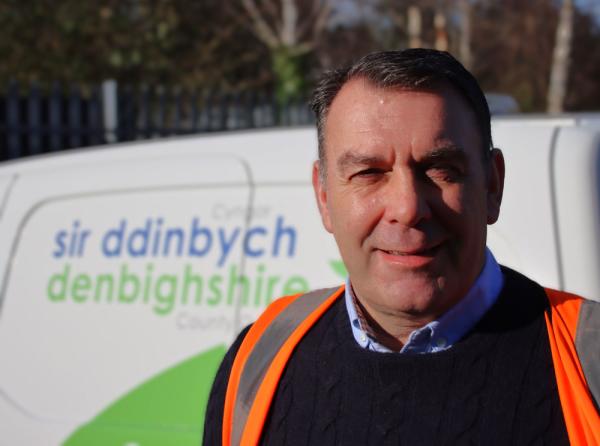
As Denbighshire County Council prepares to take part in the EV Rally Cymru 2026, fleet Manager Chris Brown discusses the council’s growing electric vehicle fleet and how it will use the rally to test the viability of EVs across varied routes and rural areas
We are delighted that Denbighshire Council is taking part in this year’s EV Rally. What made you decide to get involved?
We’re really pleased to be involved because the Rally is a great opportunity to show, in real-world conditions, how electric vehicles can support public services, local communities and the wider move towards cleaner transport.
As a Council, we’ve been working hard to reduce our carbon footprint, and taking part helps us share that journey while learning from others across the sector.
Can you tell us about your team – who will be taking part and what vehicles will you be driving?
Our team will bring together colleagues involved in fleet, transport and sustainability, all with first-hand experience of making electric vehicles work in a local authority setting. We’ll be showcasing practical, service-ready EVs from our growing fleet, demonstrating that cleaner vehicles can support everyday council operations.
Are there any aspects of the EV rally that you expect to be challenging? If so, how are you planning to address them?
The challenge is always to show that EVs can operate reliably across varied routes, rural areas and busy service schedules. That is exactly why the Rally is valuable: it puts vehicles and charging infrastructure into real-world use. Careful route planning, charging preparation and teamwork will be key, just as they are in day-to-day fleet operations. Our team will also be on hand to talk to any public members who have views on the use of EVs to factually address issues raised.
This year's rally theme is busting EV myths and misinformation. Is there a particular myth that you would like to challenge on the rally?
One myth we’d like to challenge is that electric vehicles are only suitable for short, simple journeys. Our experience shows that, with the right vehicle and suitable range, charging arrangements and planning, EVs can support a wide range of council services, from cars and vans to minibuses, specialist vehicles and emerging heavier-duty applications.
You’re hosting a check point at the end of day one of the Rally – what can teams expect when they get there?
Teams can expect a warm Denbighshire County Council welcome at the West Kinmel EV charging park and a chance to see how we are putting fleet decarbonisation into practice. We’re looking forward to sharing our experience of EV charging, use of smart energy systems and the practical steps we’ve taken to support cleaner transport across the county.
Tell us about Denbighshire Council’s own fleet decarbonisation progress and future plans?
Fleet decarbonisation is a major part of our response to the climate and nature emergency declared in 2019. We have already introduced electric cars, vans, minibuses and specialist vehicles, invested in dedicated charging infrastructure, and developed low-carbon energy solutions at our fleet depot. Our focus now is to keep replacing suitable end-of-life fossil fuel vehicles with zero-emission alternatives wherever operationally practical.